Car batteries primarily come in four main types: traditional lead-acid, Absorbed Glass Mat (AGM), maintenance-free, and deep cycle batteries. Lead-acid batteries remain the standard choice for most vehicles, offering reliable starting power at an economical price point. AGM batteries provide superior performance with spill-proof design and better vibration resistance, though at a higher cost. Maintenance-free batteries offer convenience with sealed construction, while deep cycle batteries excel in sustained power delivery for specialized applications. Climate conditions drastically influence battery selection, as extreme temperatures can impact performance and longevity. Understanding these distinctions enables drivers to make informed decisions about their vehicle’s power needs.
Expert Highlights
- Wet Cell (Flooded) batteries use liquid electrolyte and require regular maintenance but offer reliable power at a lower cost.
- AGM (Absorbed Glass Mat) batteries provide maintenance-free operation, better vibration resistance, and superior deep-cycle performance.
- Maintenance-Free batteries feature sealed designs that convert charging gases back to water, requiring no electrolyte monitoring.
- Deep Cycle batteries are designed for sustained power delivery and can handle repeated deep discharges in demanding applications.
- Standard Lead-Acid batteries remain the most common automotive choice, operating at 12.6 volts with 3-5 years lifespan.
Lead-Acid Batteries

For decades, lead-acid batteries have remained the standard choice for automotive applications, featuring a straightforward yet effective design of lead plates immersed in sulfuric acid electrolyte. Operating at 12.6 volts when fully charged, these batteries deliver the essential high-current output needed for engine starting and reliable operation of vehicle electrical systems.
While lead-acid batteries are proven performers, their typical lifespan ranges from three to five years, depending on several critical factors. Environmental conditions, driving patterns, and electrical demands all play pivotal roles in battery longevity. To maximize service life, proper maintenance is essential, including regular inspection, secure mounting, and monitoring of electrolyte levels. However, owners must be vigilant, as common issues like overcharging, excessive discharge, and temperature extremes can significantly reduce battery life and lead to premature failure.
AGM Battery Technology
AGM battery technology represents a significant advancement in automotive power storage, utilizing an innovative absorbed glass mat design that fundamentally changes how the electrolyte interacts with battery plates. This sophisticated construction creates a spill-proof, maintenance-free power source that delivers exceptional performance in demanding conditions.
The advantages of AGM batteries are substantial, offering higher power density and faster recharging capabilities compared to traditional lead-acid alternatives. Their robust construction provides superior vibration resistance, making them ideal for high-performance vehicles and motorcycles. While the initial investment in AGM batteries is higher, their extended lifespan and superior deep-cycle performance justify the cost. These batteries excel in applications requiring frequent charge-discharge cycles, providing reliable power delivery while maintaining their structural integrity over time.
Wet Cell Battery Design

While AGM technology represents modern battery innovation, wet cell batteries continue to serve as the backbone of automotive power systems worldwide. These traditional batteries utilize a liquid electrolyte solution, consisting of diluted sulfuric acid and water, which interacts with lead plates to generate electrical energy through electrochemical reactions.
The design of wet cell batteries offers superb advantages, particularly in delivering superior power density and high current output, making them perfect for demanding automotive applications. However, these batteries require regular maintenance, including monitoring and replenishing electrolyte levels, to maintain excellent performance. Users must also consider factors such as temperature fluctuations, vibration exposure, and proper charging practices, as these variables can greatly impact battery longevity and reliability.
Despite their maintenance requirements, wet cell batteries remain a reliable and cost-effective power solution.
Maintenance-Free Battery Options
Modern automotive technology has embraced maintenance-free batteries as a convenient alternative to traditional wet cell designs. These sealed, valve-regulated lead-acid (VRLA) batteries utilize an innovative recombination process that converts charging gases back into water, eliminating the need for periodic water additions. Their spill-proof design allows for flexible mounting options, making them ideal for vehicles with limited access to battery compartments.
While maintenance-free batteries offer superior convenience and versatility, consumers should consider certain trade-offs. These units typically have a shorter service life of 3-5 years compared to conventional wet cell batteries, which can last 5-7 years with proper care. Additionally, the higher purchase price and potential performance limitations in extreme temperatures should factor into the decision-making process when selecting a battery type.
Deep Cycle Batteries

Engineered for sustained power delivery, deep cycle batteries differ fundamentally from standard starter batteries in both design and function. Their robust construction features thicker plate materials, enabling them to withstand repeated deep discharges of 50% or more of their total capacity before requiring recharge, making them ideal for demanding applications.
These specialized batteries excel in environments requiring continuous power output, such as recreational vehicles, marine vessels, golf carts, and renewable energy storage systems. Their performance and longevity depend on several critical factors, including battery chemistry, construction quality, and usage patterns. To maximize the lifespan of deep cycle batteries, regular maintenance is essential. This includes keeping battery terminals clean and maintaining proper electrolyte levels, ensuring prime performance throughout their service life.
Lithium-Ion Automotive Batteries
Lithium-ion automotive batteries represent a significant advancement in vehicle power technology, offering superior performance characteristics compared to traditional lead-acid and deep cycle batteries. These advanced power systems deliver enhanced energy density and rapid charging capabilities, making them ideal for modern electric and hybrid vehicles. While the initial investment is higher, the long-term benefits include reduced weight, improved fuel efficiency, and extended service life.
Specialized battery management systems monitor temperature, voltage, and charging status to preserve optimal performance and prevent potential safety issues. Advanced thermal management is vital for maintaining battery efficiency across various operating conditions. Proper disposal and recycling protocols must be followed due to hazardous materials within the cells.
Understanding and implementing these sophisticated battery systems requires careful attention to technical specifications, charging requirements, and safety protocols, making them a cornerstone of modern automotive innovation.
Battery Size Classifications

The standardized group size system provides a pivotal framework for automotive battery classification, ensuring proper fitment and compatibility across various vehicle makes and models. Battery group sizes, which range from 24 to 78, directly correspond to specific physical dimensions and terminal configurations that must match the vehicle’s battery tray and connection requirements.
When replacing a vehicle’s battery, identifying the correct group size is indispensable for proper installation and function. This information can be found both on the existing battery and in the vehicle’s owner’s manual. As the group size number increases, so does the physical size of the battery, affecting its length, width, and height measurements. Understanding these classifications is paramount for selecting the appropriate replacement battery that will fit securely and connect properly to the vehicle’s electrical system.
Climate Performance Requirements
Beyond physical dimensions, climate conditions play a fundamental role in determining the most suitable battery for a vehicle. In colder regions, batteries must deliver higher cold cranking amps (CCA) to overcome increased engine resistance and thick oil viscosity during startup.
Conversely, hot climates demand batteries with superior reserve capacity (RC) to handle the additional strain from air conditioning and cooling systems while maintaining reliable performance.
Extreme temperatures dramatically impact battery performance, making proper selection crucial for vehicle reliability and battery longevity.
Cold weather operations require higher CCA ratings to guarantee dependable engine starting in frigid conditions.
Hot climates necessitate enhanced reserve capacity to support increased electrical demands while preventing premature battery failure.
The careful matching of battery specifications to local climate conditions guarantees optimal performance and maximizes the battery’s service life, ultimately preventing costly failures and unnecessary replacements.
Battery Installation Guidelines
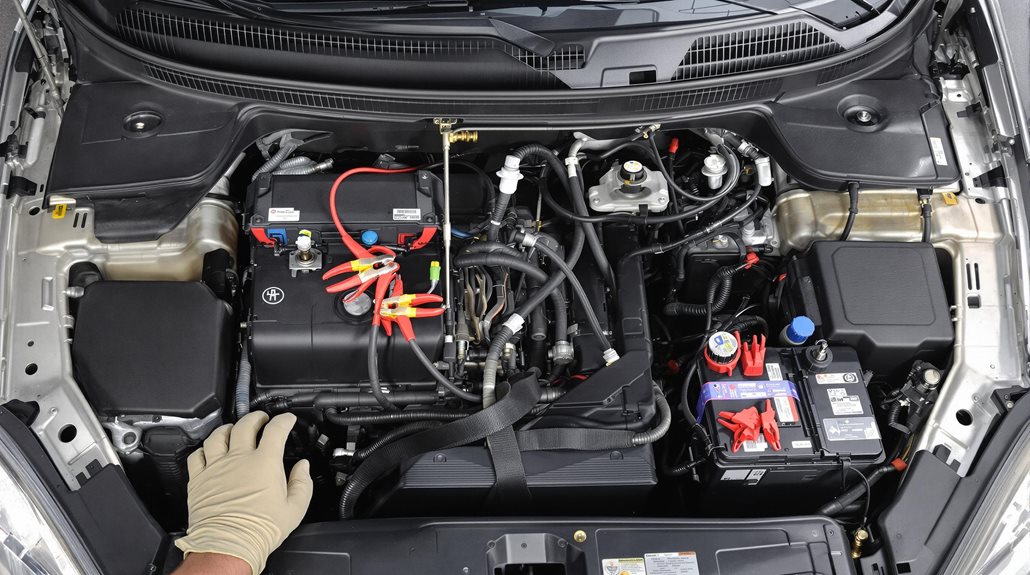
Proper installation of a car battery requires careful attention to detail and adherence to specific safety protocols. Before installing a new battery, confirm it matches the correct group size for your vehicle’s battery tray and power requirements. Thorough preparation is essential, including cleaning the battery tray and cable connections with a wire brush to prevent future corrosion issues.
Apply dielectric grease to the cable connectors to guarantee long-term protection and secure connectivity.
When connecting the battery, always attach the positive cable first, followed by the negative cable, verifying all connections are properly tightened. After installation, start the engine and let it run for several minutes to initiate the charging process. Finally, confirm that all electrical systems are functioning correctly to complete a successful battery installation.
FAQ
Can I Mix Different Battery Brands When Replacing My Car Battery?
Mixing different battery brands when replacing your car battery is not recommended. It can lead to compatibility issues, potential system malfunctions, voided warranties, and compromised performance. Stick with the same manufacturer.
How Long Should I Idle My Car to Recharge a Weak Battery?
While idling for 5-10 minutes provides minimal charge, it’s more effective to drive the vehicle for at least 30 minutes at highway speeds to properly recharge a weak battery.
Why Does My Car Battery Smell Like Rotten Eggs Sometimes?
A rotten egg smell indicates hydrogen sulfide gas release due to battery overcharging or damage. This occurs when the electrolyte solution breaks down, requiring immediate attention as the gas is hazardous.
Will Using My Phone Charger Drain My Car Battery When Engine’s Off?
Yes, charging your phone with the engine off draws 5-10 watts of power, which will gradually drain your car battery. It’s recommended to avoid using phone chargers unless the engine is running.
Can Jump-Starting Another Car Damage My Vehicle’s Battery or Electrical System?
Yes, jump-starting another vehicle can potentially damage your car’s electrical system and battery if done incorrectly. Improper connections or jumping severely damaged batteries pose risks to both vehicles.
Experts Final Thoughts
The evolution of car battery technology continues to shape the automotive industry, with each type offering distinct advantages for specific applications. From traditional lead-acid designs to advanced lithium-ion systems, proper battery selection remains critical for vehicle performance and reliability. Understanding battery types, maintenance requirements, and installation procedures guarantees ideal vehicle operation while maximizing battery lifespan. As automotive technology advances, staying informed about battery options becomes increasingly essential for both consumers and professionals.